

Customer conversations are operational work
A customer message is rarely just a message. It can be a delivery question, a sales opportunity, a payment issue, or a signal that a customer may leave. The best teams treat every conversation as work that needs context, ownership, and a clear next step.
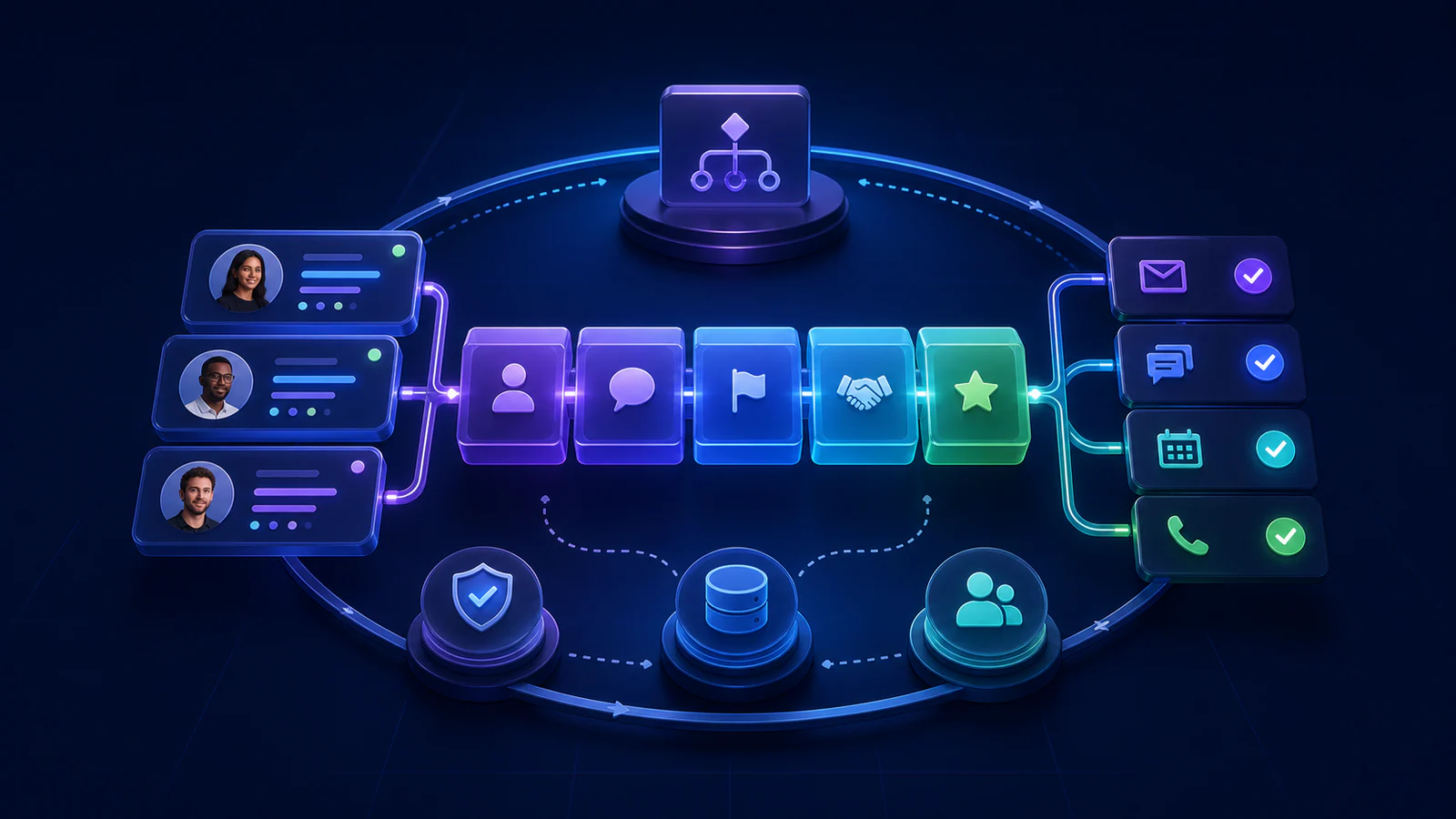
That shift changes the operating model. Instead of measuring only reply speed, teams can ask three better questions: Did the right person or agent own the conversation? Did they have the context to act? Did the outcome update the rest of the business?
Start with one accountable queue
When channels, inboxes, and CRM records live separately, teams spend time reconstructing what happened. A shared queue creates a single place to see the message, customer record, service history, and current owner.
The queue should make four states obvious:
- New work that has not been triaged.
- Active work with one accountable owner.
- Work waiting on the customer or another team.
- Resolved work with a recorded outcome.
This model reduces duplicate replies and makes handoffs inspectable. It also gives automation a safe structure: rules can route known cases, while exceptions remain visible to people.
Give AI a bounded role
AI is most useful when it operates inside explicit business rules. It can answer grounded questions, collect one missing detail, summarize a long thread, or prepare a handoff. It should also know when to stop.
A practical policy defines which sources the AI may use, which actions it may take, and which cases always require a person. Confidence alone is not a control. Teams also need permissions, task state, audit history, and a named human fallback.
Close the loop in your CRM
A resolved conversation should leave useful evidence behind. Update the contact, deal, task, tag, or outcome that another workflow depends on. Keep the update small and intentional: a verified preference is useful; a transcript dump usually is not.
This is the new rhythm: capture the signal, establish ownership, act with context, and record the outcome. When every step is observable, leaders can improve the system without asking teams to work from memory.